
Anfragen
Direkter Draht
Wilkommen | Welcome | Hoş geldin | Witamy
Bienvenue | Bienvenido | Benvenuto
Bi xer hali | Ongi etorri | arabisch



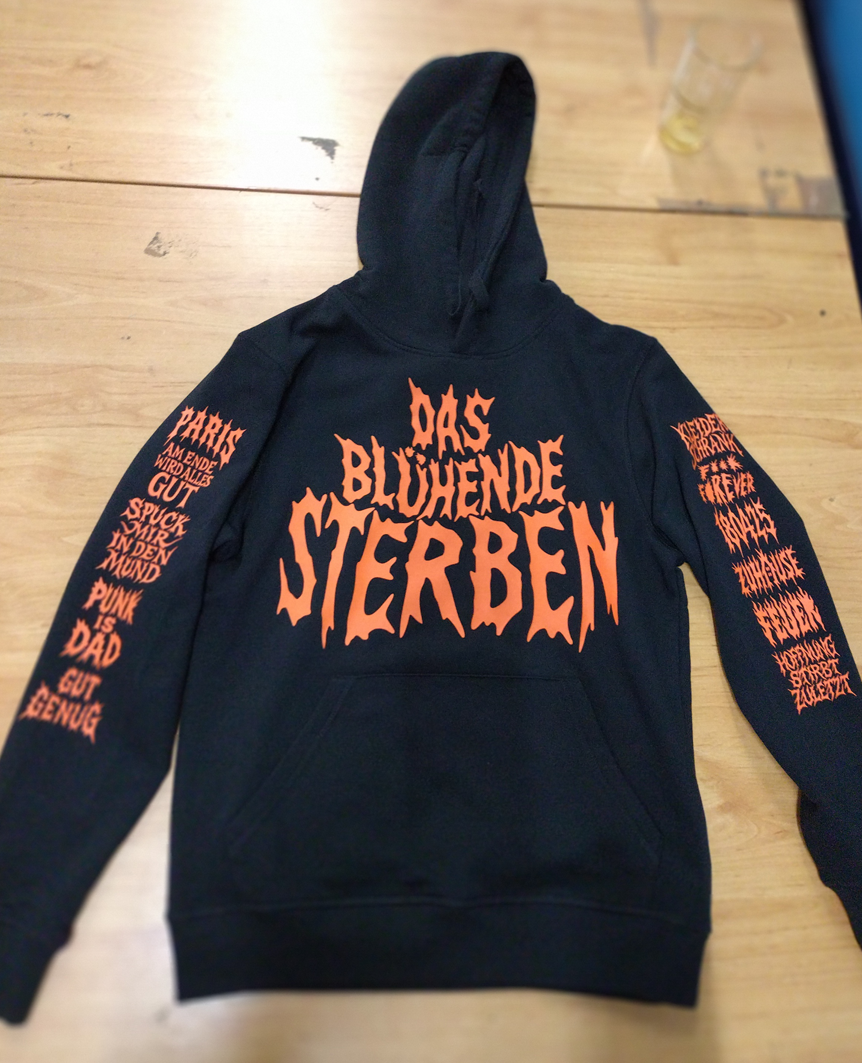
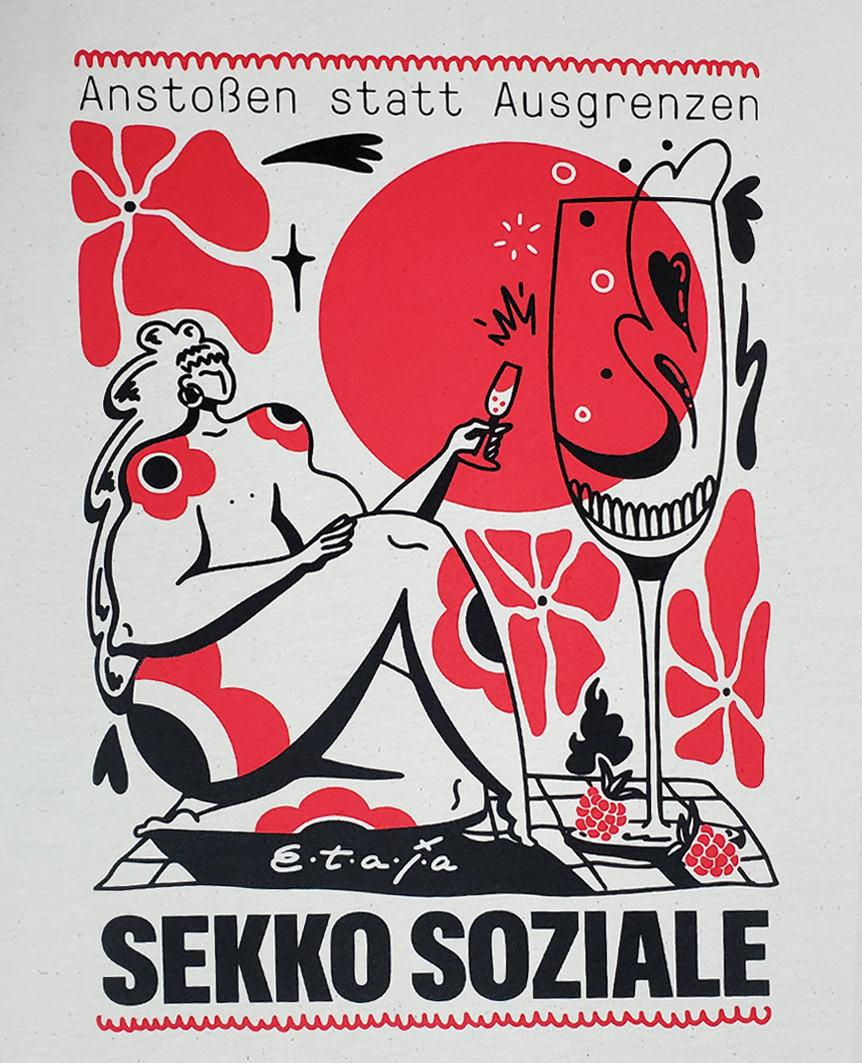
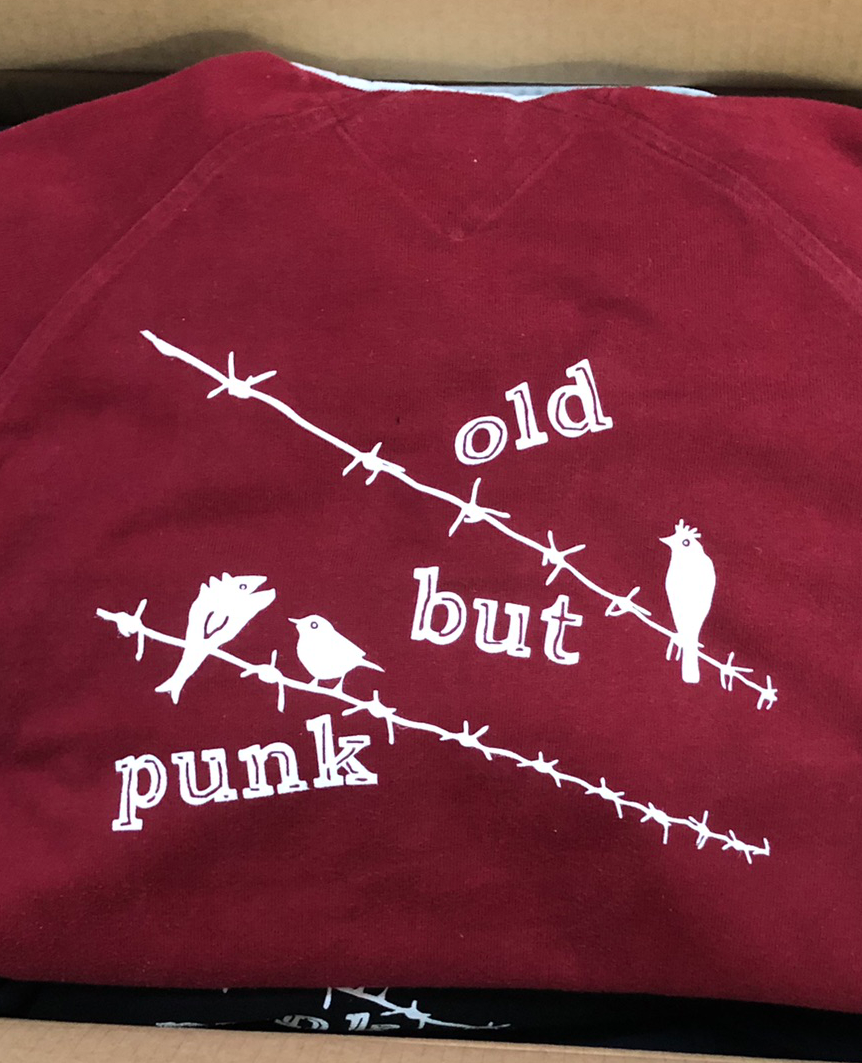
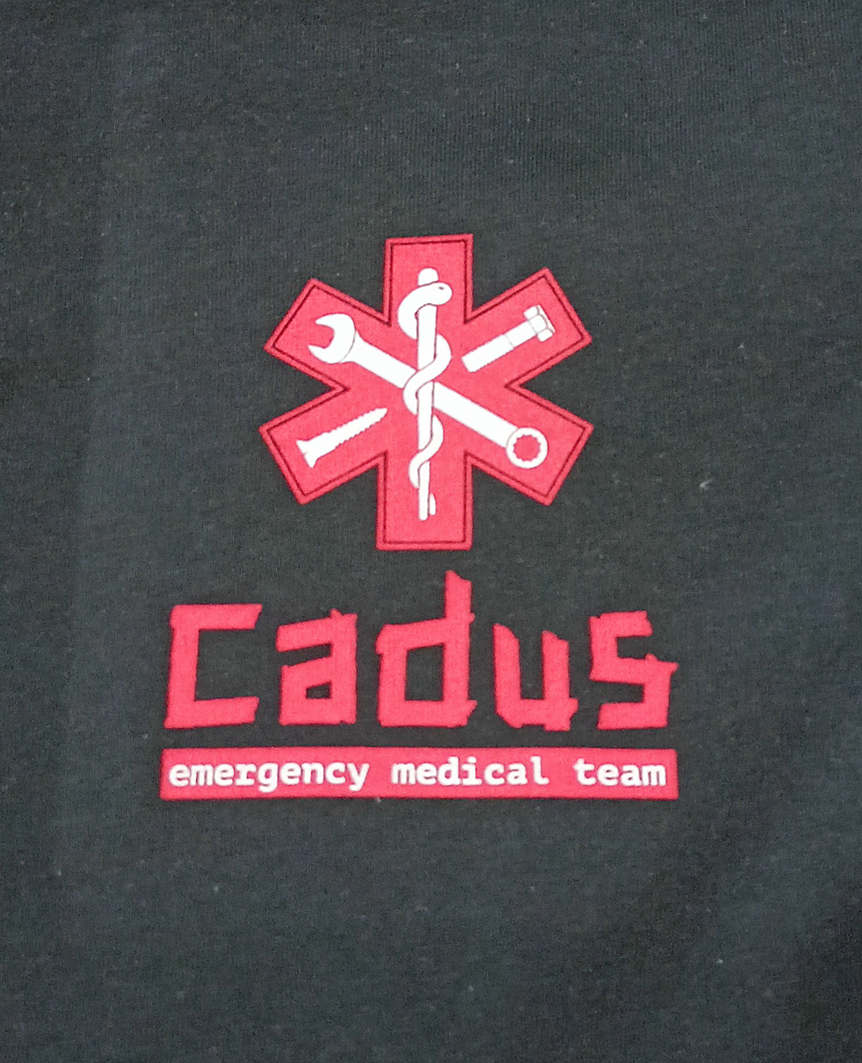
About US
We are five collectivists who decide together what we want to prroduce and under what conditions. This applies both to our own work structure and to our collaboration with our partners.
Our ethical compass points towards ecological, climate-friendly and socially just working and production conditions. Every day we are confronted with the fundamental contradiction to destructive and exploitative capitalism. We dispise right-wing-extremists and Nazis; sexist and racist worldviews must be fought and eradicated. Solidarity and equality for all people are our foundation.
We embrace a collaborative, solidarity-based approach that doesn’t view customers and producers as competitors, but rather seeks shared solutions. We embrace creative processes, unorthodox ideas, artisanal finesse, clever experiments, and beautiful results.
We are members of Vollgut e.G. and active in the Berlin Collective Network.
CONSULTING
Whether it’s textiles, graphics, layout or adapting your designs for screen printing, embroidery or DTF; we’re happy to advise and support you and work with you to find solutions. You’re welcome to schedule an appointment with us, touch and select textiles, and gain a deeper insight into the printing process by strolling through our workshop.
Printing process | Embroidery
Screen Print
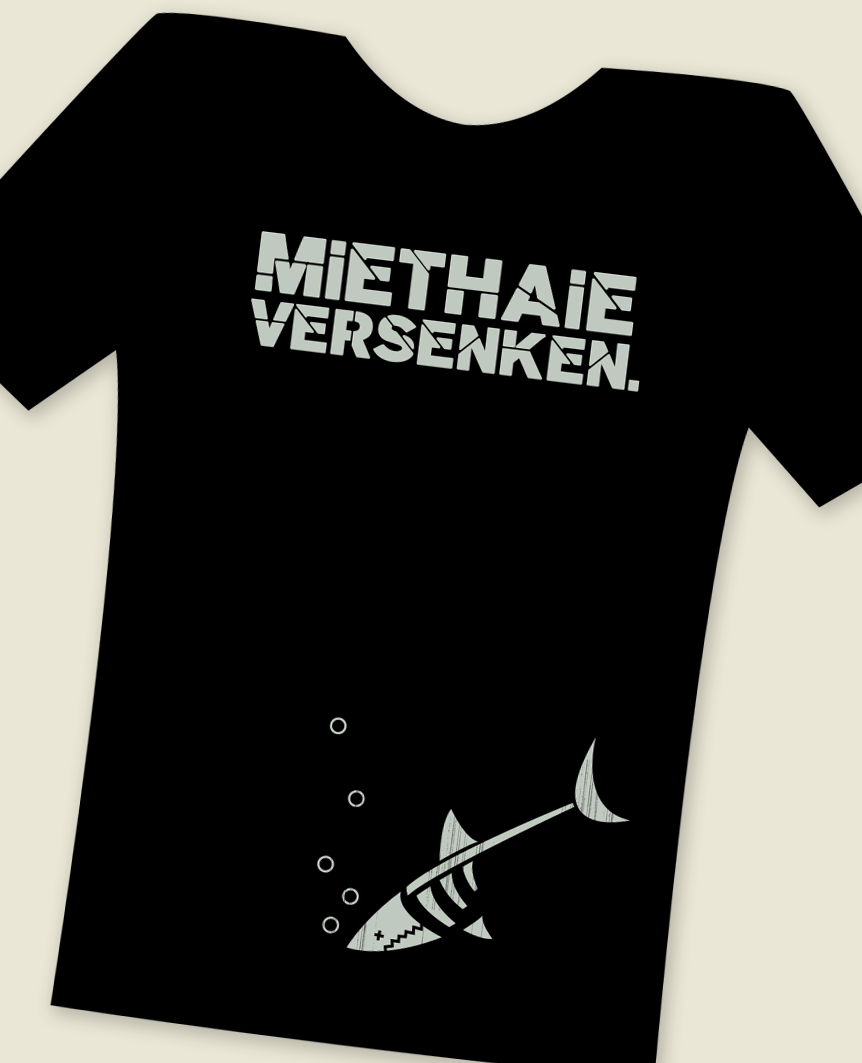
Paint is pressed through a screen-printed sieve.This process is called the squeegee. Previously, the screen was coated with a photosensitive emulsion; coated on both sides with a practiced hand swing. Once the coated screen has dried, the design is exposed onto the coating using a transparent foil (film). The emulsion is then rinsed out, and the design becomes visible. This then serves as a stencil for the applying paint using a squeegee. Basically, it’s a simple stencil technique. Each color requires a prepared screen.
The designed motifs are usually prepared for printing on the computer and then printed on film. Printing on textiles, for example, differs from printing on paper and therefore requires a separate assessment of the artwork processing.
The prepared screens are clamped into a so called carousel and precisely adjusted for printing. We mix the desired colors ourselves, primarily based on the Pantone and HKS color systems.
For environmental reasons, we only print with water-based inks. We do not use plastisol or varnish-based inks; we even do not perform the discharge process (etching).
File formats
The vector: .pdf, .ai, .svg, .eps
Images: .pdf, .psd, .tif, .jpg, .png – Resolution: min. 300 dpi – 800 dpi
DTF
The (multi-colored) design – which rests on a plastic film – is applied to the textile using pressure and heat. This printing technology is called direct-to-film (DTF). The design is first printed onto the plastic film (transfer film) by computer – just like with any conventional printer. The still-wet ink is then coated with a hot-melt adhesive powder. When pressed onto the textile, the adhesive gels.
This technology is currently undergoing tremendous development. The quality of the images, color brilliance, and processing speed are paramount here – under capitalist profit-maximizing premises. So far, we are not aware of any solutions that focus on ecological or even sustainable aspects. With every image, a plastic film remains as waste, which then lingers on the planet for centuries. Ideally, it is recycled somehow; otherwise, it is incinerated, releasing the associated toxins into the air, or ends up in the oceans…
This isn’t a preferred printing process for us. We use it only as a supplement or combination, or as a way to compensate for labor- and resource-intensive proofs —i n other words, for producing sample copies.
File formats
The vector: .pdf, .ai, .svg, .eps
Images: .pdf, .psd, .tif, .jpg, .png – Resolution: min. 300 dpi – 800 dpi
Mode: CMYK or RGB.
EMbroidery
Designs can also be embroidered onto textiles; sometimes screen printing is combined with embroidery on a textile. Caps, for example, are often embroidered.
For embroidery, we work closely with established partners. The embroidery technique also requires technical preparation. Here, too, you often have to make compromises in the design, which then depend on the feasibility of the embroidery technique. Depending on whether your design requires a lot of embroidery or not, the number of stitches is determined and calculated accordingly. Templates should generally be vectorized files (.eps, .ai, .svg, .pdf). We or our partners can advise you on this.
ANFRAGEN
DIREKTER DRAHT
Graphics / Layout
Graphics
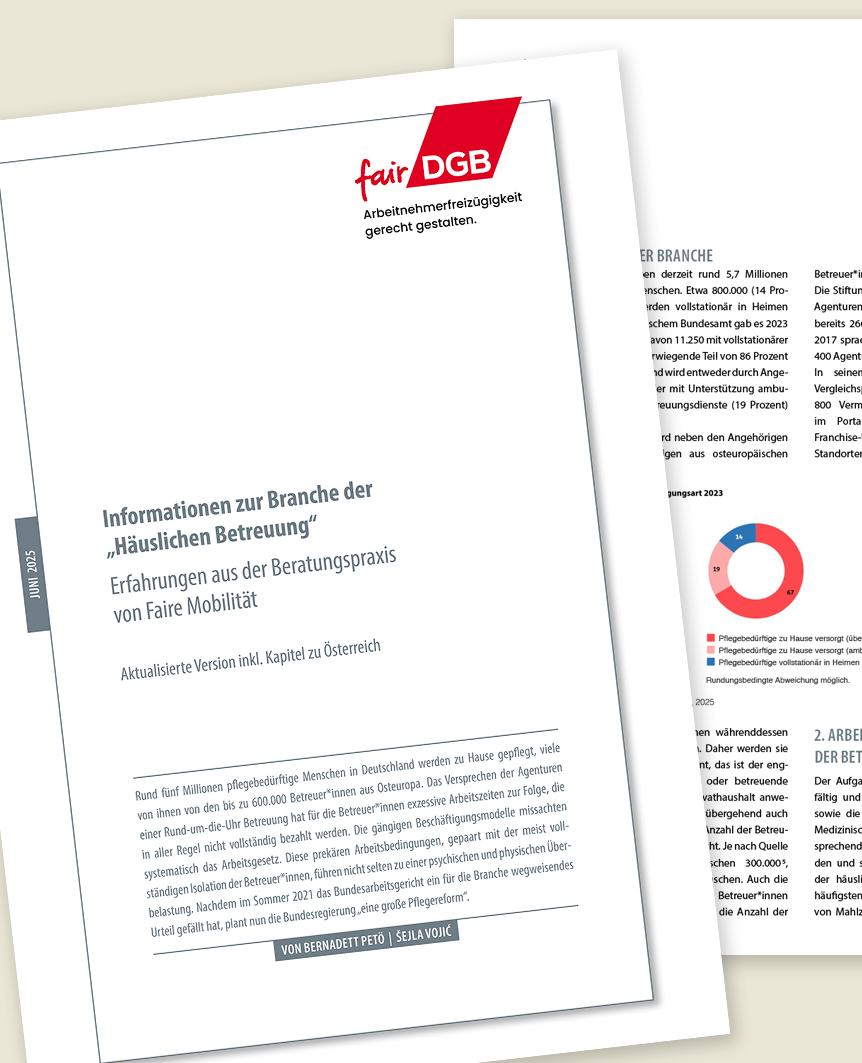
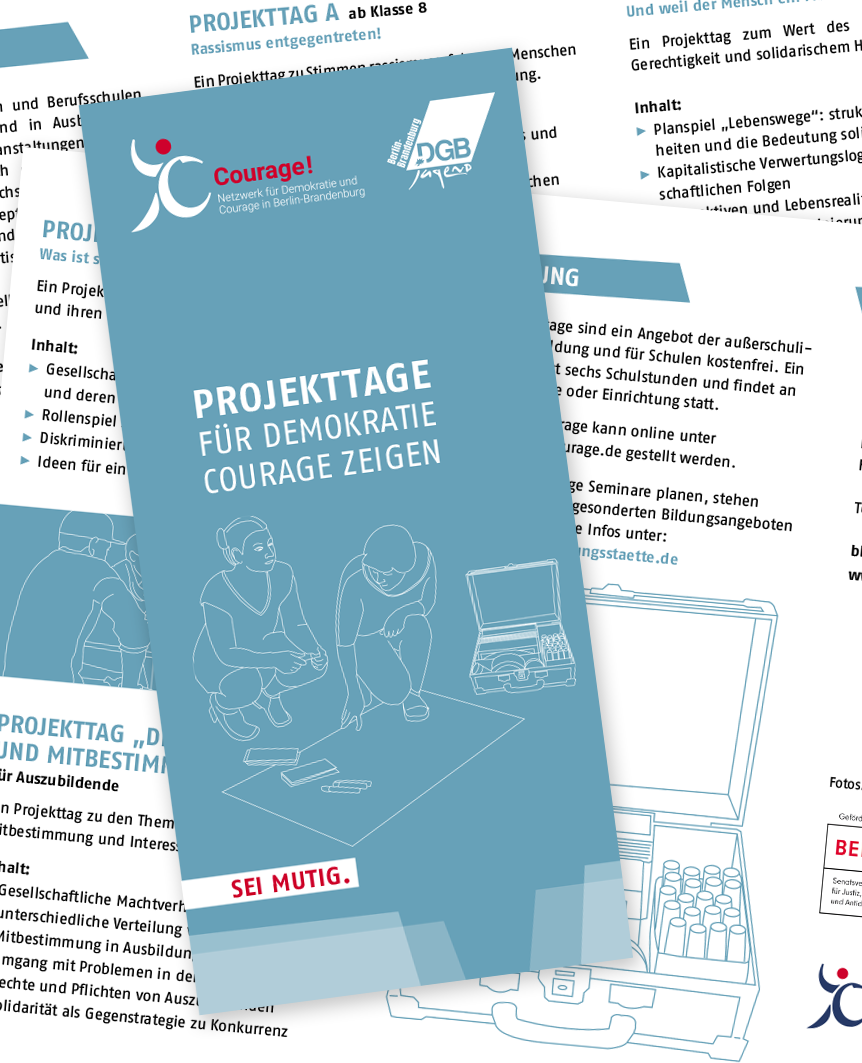
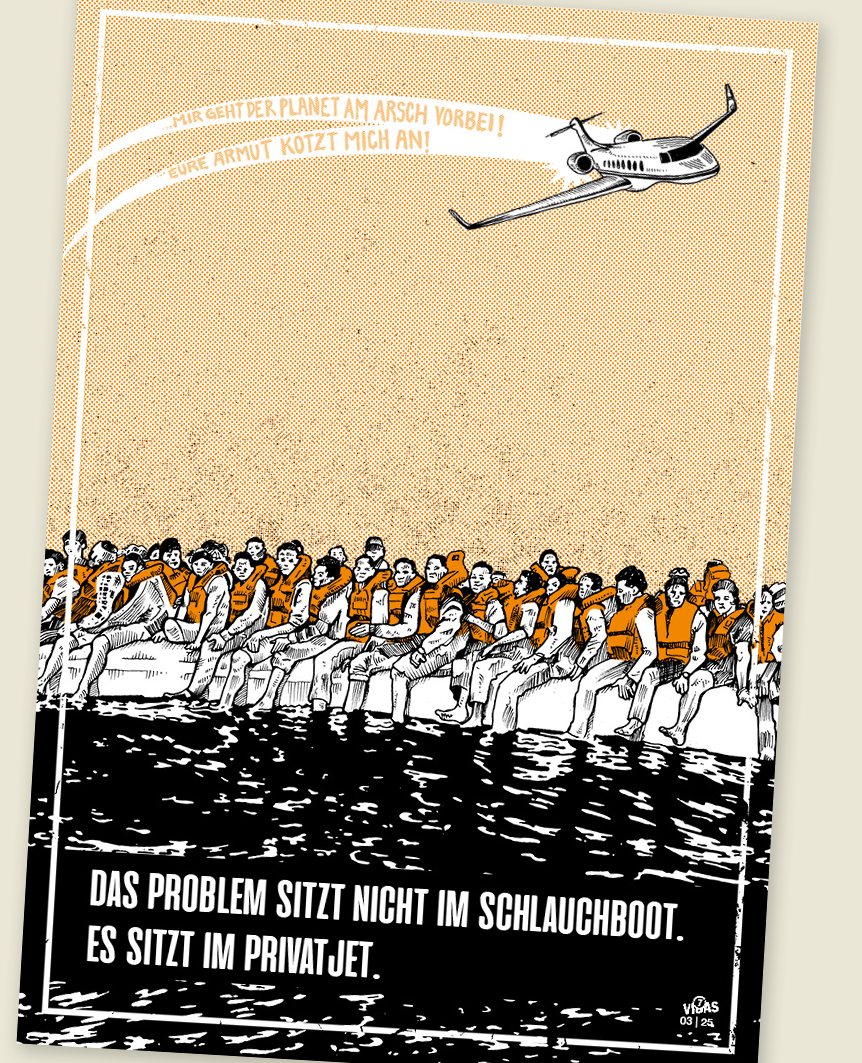
We’re not just textile printing artisans, but also graphic designers, layout artists, and illustrators. Even paper is our specialty – we work closely with our partners on the printing itself. We create layouts for books, posters, flyers, leaflets, brochures, business cards, stationery, stickers, etc. – anything that needs to be printed. We design logos and wordmarks and create striking illustrations and skillfully arrange letters in a chaotic or neat typographic style.
References Textile Printing
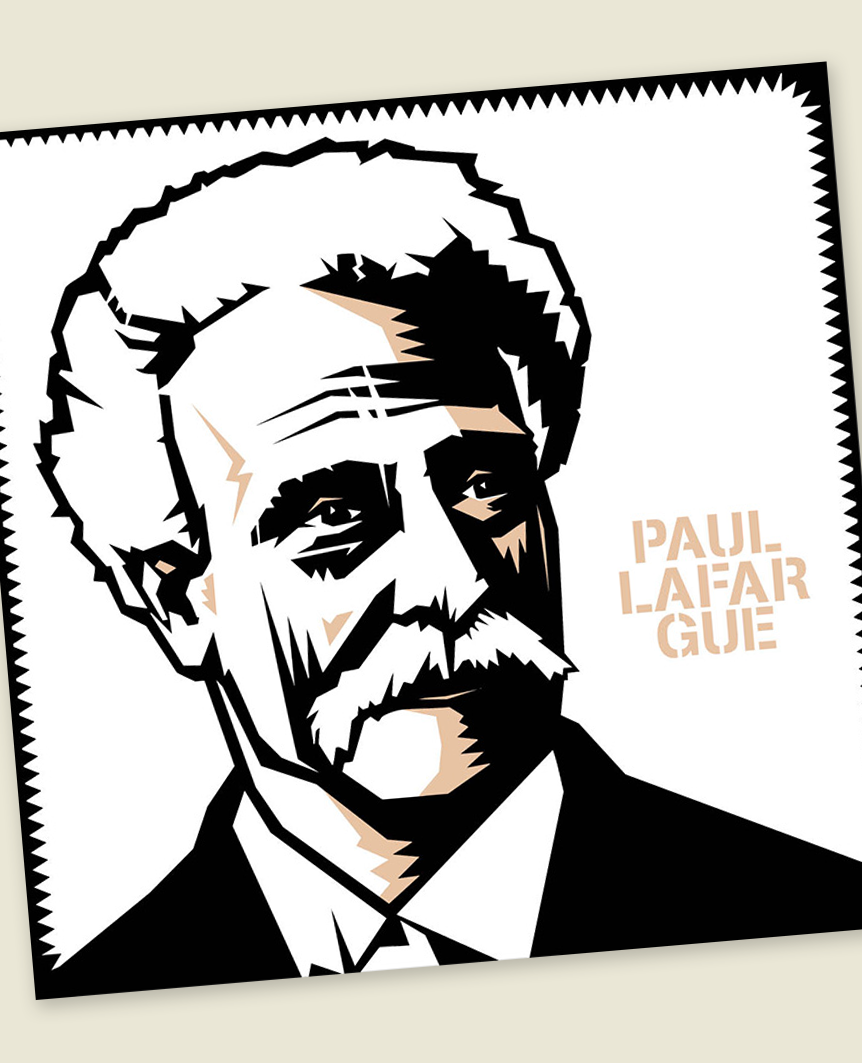
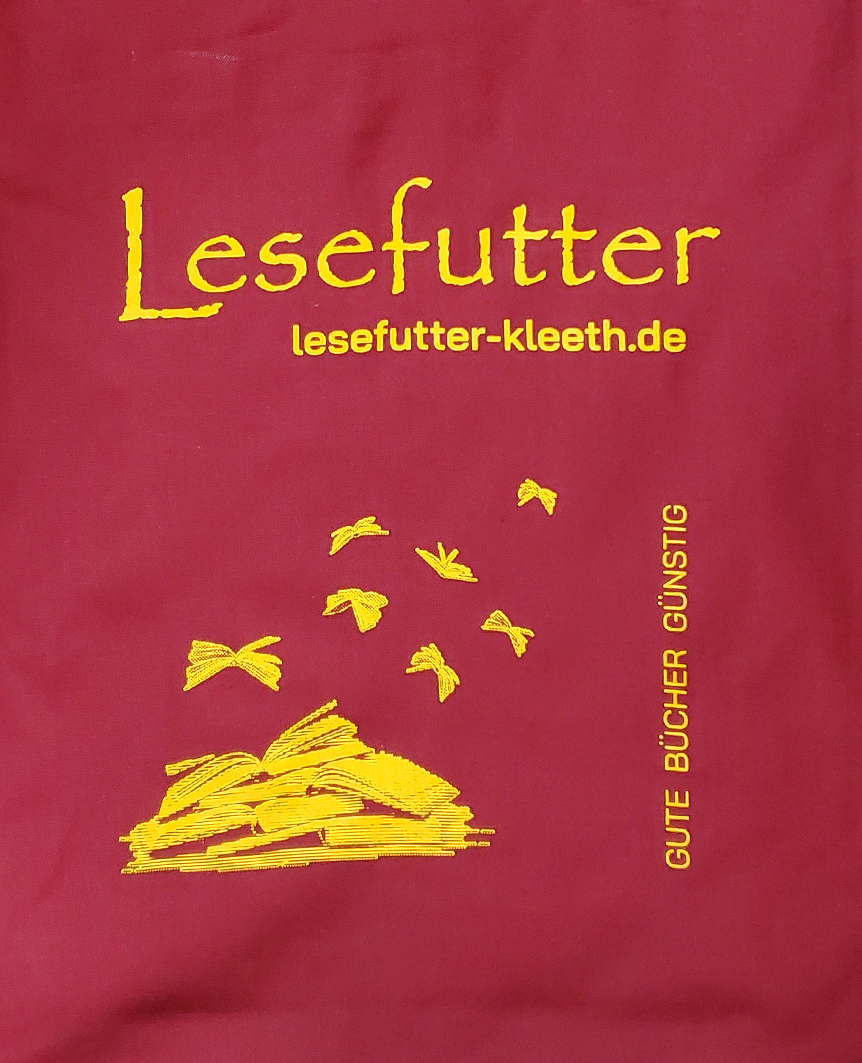
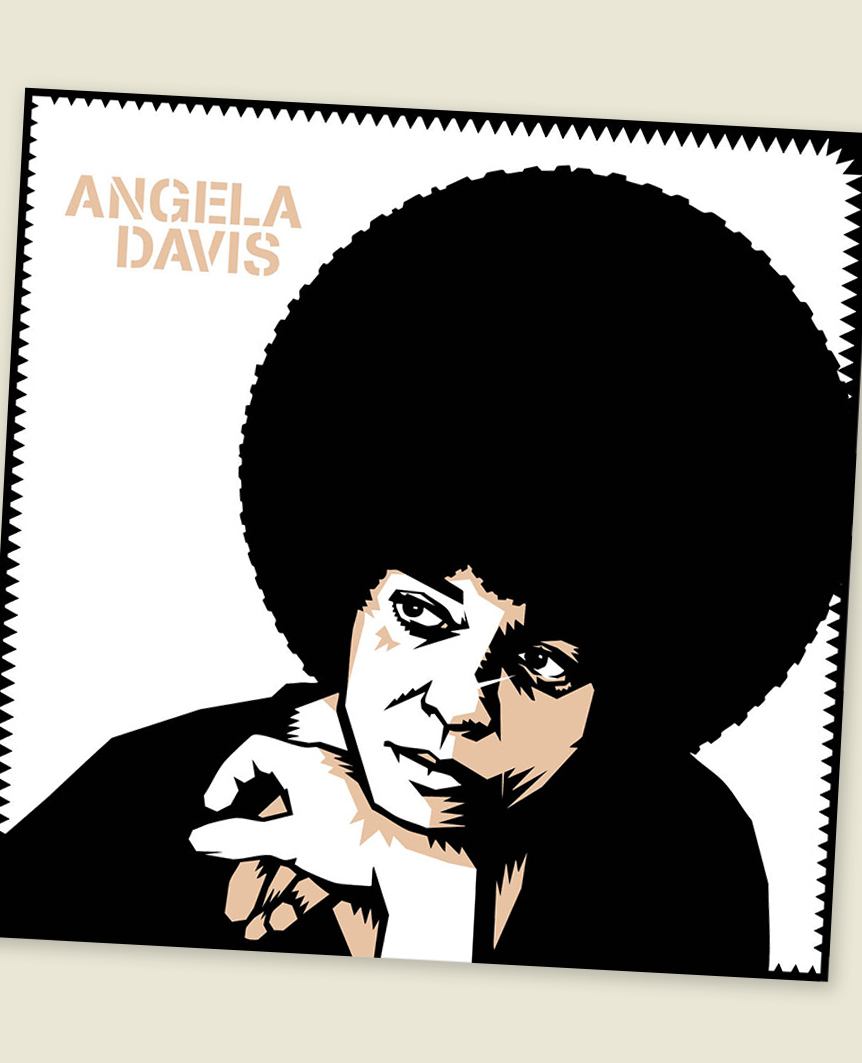
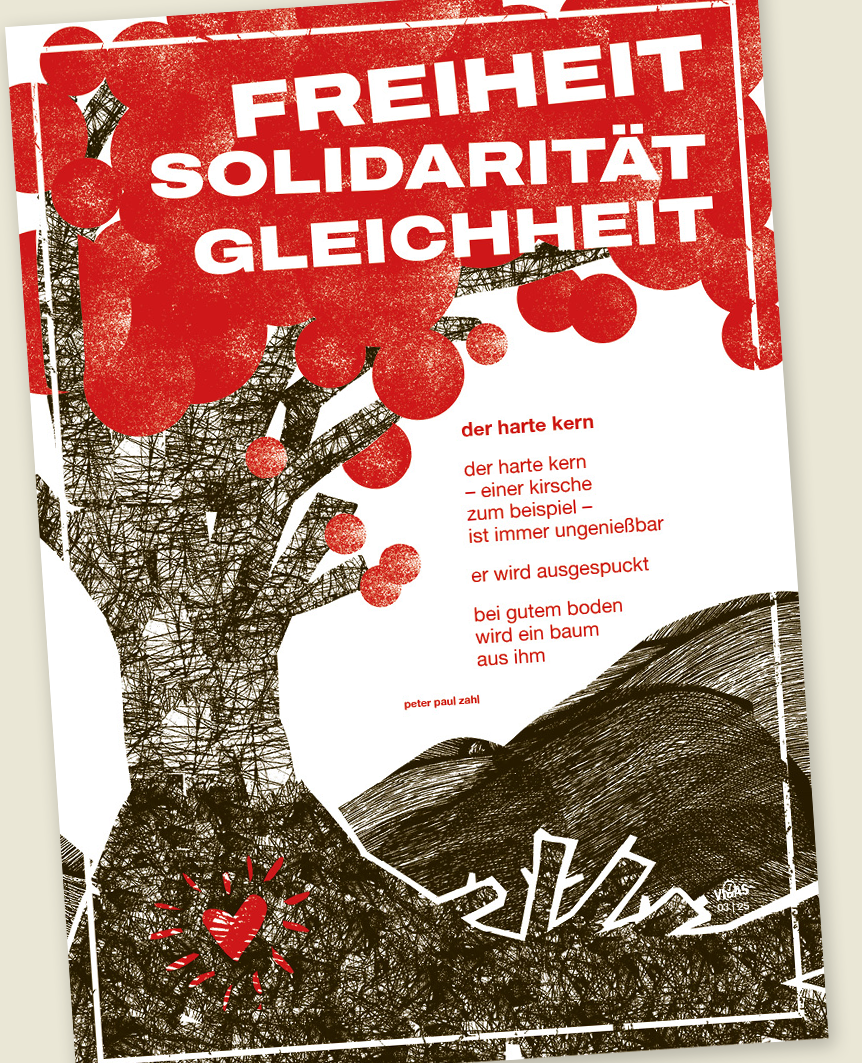
Referenzen Grafik/Layout
Textiles
The necessity of clothing for human beings cannot be underestimated. As a generative need for personal expression, the conditions of production have long since faded into the background. However, the fact that there is a seemingly endless selection of textiles in wealthy countries is based on a fundamental relationship of exploitation within global capitalism.
Cheap manufacturing, for example, in Bangladesh for low or affordable prices as mass-produced goods in Germany is the norm. How can this global injustice be circumvented or even eliminated? There is no way to eliminate it within the existing, profit-driven production conditions and existing supply chains.
At best, there is a kind of compensation or an effort to transform the unacceptable reality in such a way that, in the long term, a world of solidarity and equality, climate-friendly approaches, along ecological principles and resource-saving practices emerges.
Supply chain transparency are practical ways to achieve this. We are therefore committed to closer collaboration with textile companies that are climate-friendly, ecological, and Fair Trade-oriented. GOTS certification is part of a pragmatic effort to produce more responsibly. It represents a significant financial burden for smaller companies. Many smaller companies. including ourselves, strive to pursue a socially and environmentally responsible approach even without GOTS certification.
We also print on conventional, non-fairly produced textiles. But our goal is to guide you, our customers, in a different direction.

Our planet faces enormous environmental, social, and economic challenges. […] Sustainability and care for the Earth and its inhabitants have always been a top priority in all Stanley/Stella activities. […]
The Stanley/Stella Charter, established in 2022, is our guiding framework that reflects our company’s values as a company in the apparel industry. It expresses our commitment to addressing critical environmental, social, and governance issues within our sphere of influence. […]
Our goals and commitments for our planet
We know that the Earth’s natural resources are precious and finite, which is why we do everything we can to protect them. We are all aware that we are reaching the limits of our planet’s natural resources. At Stanley/Stella, we want to take responsibility and protect soil, water, air, and biodiversity. Our three key areas of action are avoiding the use of harmful materials and chemicals, reducing CO2 emissions, and promoting a circular economy.
Nature conservation
Preservation of soil, water, air and biodiversity through responsible material sourcing, manufacturing, distribution and decoration.
CO2-foot print
Contribute to global carbon neutrality through leading CO2 reduction activities across our entire value chain and participation in offsetting initiatives.
Circular economy
Minimizing product and packaging waste at the consumption level, steps toward circular business models. […]
Eco/Fair
Logos + Verlinkung aus dem Bereich ÖKO/FAIR
conventional
Logos + Verlinkung aus dem Bereich Konventionell
Prices

You will only receive a quote with binding prices if you request it via email.
Nevertheless, you can use our Calculator. Using your basic information, we can carry out a non-binding calculation in the area of screen printing to see what the approximate price range would be.
We print from 25 copies with the same design, the same size and color.
We do not produce individual textiles or small quantities.
Contact
Opening Hours
Mon – Thu 10:00 – 16:00
Fri 10:00 – 15:00
Printworks Berlin GmbH
Collective Textile Printing
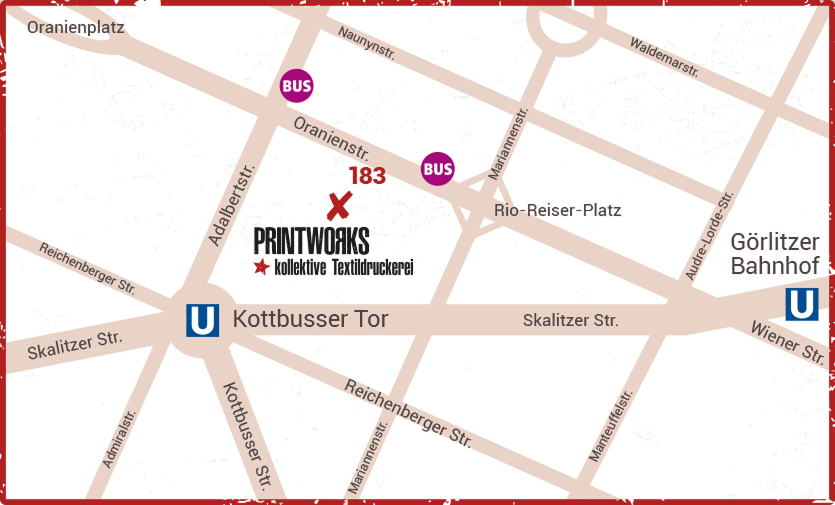
Oranienstraße 183
10999 Berlin
Entrance 3 – Ground Floor (last courtyard)
[e] gmbh-mail@printworks-berlin.de
[t] +49 30 629 01 695
U1/U3 Görlitzer Bahnhof
U1/U3 + U8 Kottbusser Tor
Bus M29 (Rio-Reiser-Platz)
Bus 140 (Adalbertstr./Oranienstr.)
Bicycle parking available in the courtyard
You can drive into the courtyard
with a car/van for pickup